Scenario-Based Learning Approach - What it is and Why Scenario-Based Training is Better for eLearning
Aug 02, 2020
When designing eLearning content, it can often be difficult selecting activities that fit your learners’ realistic needs.
Scenario-based learning is an excellent instructional strategy that helps improve learner engagement, immersing the learners in real life or situational learning experiences.
Delivering content in contextual settings provides learners with opportunities to develop skills or information that they can not transfer into future real life situations.
What is Scenario-Based eLearning?
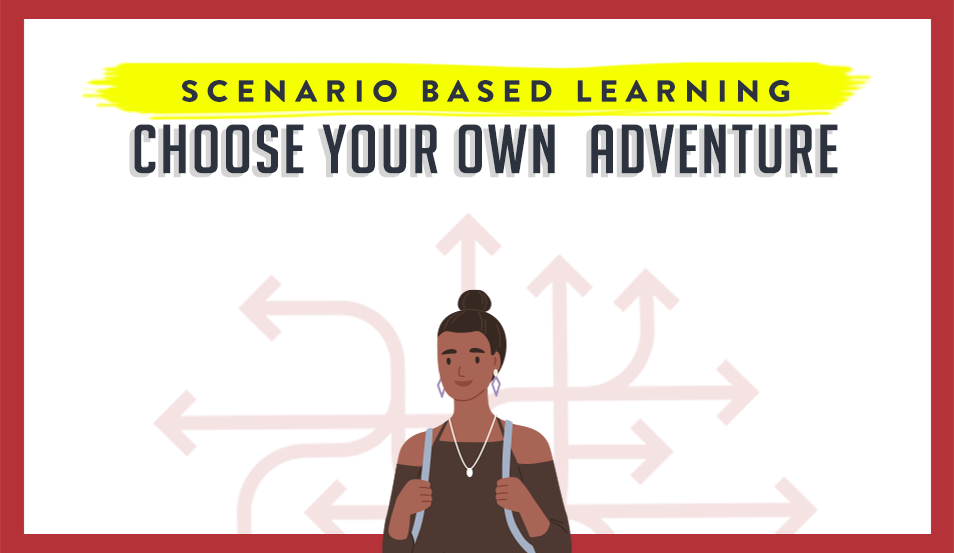
So you might be wondering what scenario-based eLearning actually is. In this type of instructional strategy, lessons are built around a scenario. Learners are asked to make decisions by choosing among multiple options.
Following the provided information, feedback should be presented to the learners for each option to explain why they are either correct or incorrect.
Learners are able to learn about strategic principles by applying them to a concrete situation and observing the consequences of their decisions.
This approach is appropriate in a variety of contexts, such as: to develop problem-solving or interpersonal skills; to teach strategic principles; to develop an interactive exercise at the end of a unit.
Scenario-based learning lets learners learn through a trial-and-error process without having to face the consequences of making a wrong decision when applying their knowledge in a real-life situation.
Why Should You Use a Scenario-Based Approach in eLearning?

Scenario based learning helps improve learner engagement and understanding in a variety of ways.
- It motivates learners to learn thanks to the fact that they know they have skills needed to accomplish the task. They understand that they are going to be challenged, but are confident in themselves that they can meet the challenge, building upon their skills.
- Scenario-based learning helps learners see their skills and knowledge directly benefit them long term.
- A well designed eLearning scenario will challenge learners to the degree in which they can expand their knowledge without overwhelming them.
- This type of learning provides learners with real world obstacles and problems that they will face in order to expand their skills and knowledge, while keeping them engaged in the eLearning process.
This type of learning is an eLearning strategy that is great for soft skills training.
It is often used for training that requires social interaction, critical thinking, situational awareness, and decision-making and is a great option when it comes to role-playing scenarios.
It is also a good tool for introverts who don’t particularly enjoy acting things out in a group.
Scenario-based learning is an effective instructional strategy. Delivering content in a scenario-based setting provides learners with opportunities to develop skills or information that they can transfer into future real life situations.
A scenario in an eLearning course is essentially a story.
To learn more about applying scenarios in eLearning, join the eLearning and Instructional Design for Beginners Community. The community provides you with a step-by-step guide on how to apply scenario-based learning in an online course. Start your career in Instructional Design (ID) and eLearning. Build an online course from scratch and finish with mastery.
Whatever you need help with, the community is there to help you master your skills. Interested in joining the community? Click here to get started

Free: The Storyboard-to-Portfolio Checklist
44 practical checks to take you from storyboard to an instructional design portfolio that gets you hired.
No spam. Unsubscribe anytime.